

What Is Picual Olive Oil? Flavor, Quality and How to Use It

Short answer: Picual olive oil is made from the Picual olive, Spain's most widely planted variety and the flagship of Jaén in Andalusia. It tastes green, fruity, bitter, and peppery. Bottles from early-picked olives taste boldest.
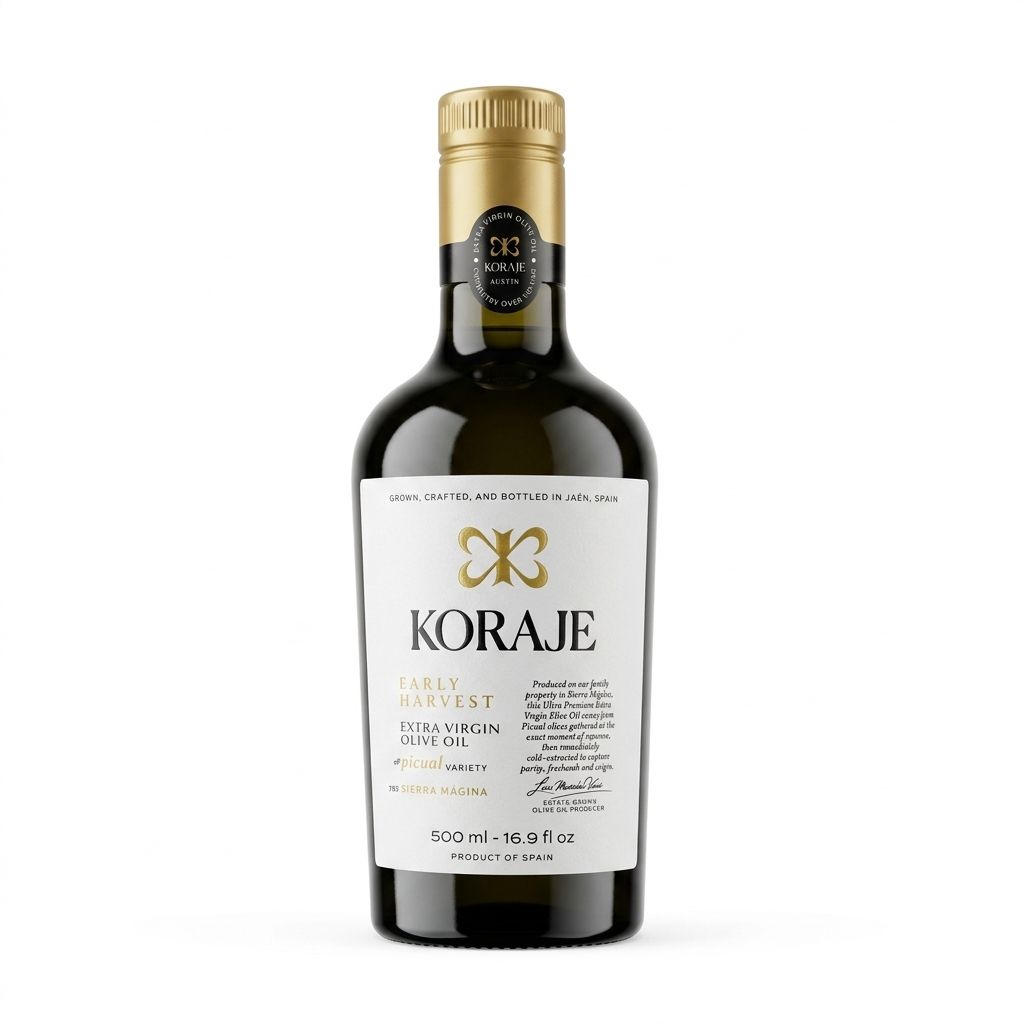
Picual from Jaén is a global reference point for high-quality olive oil. This guide covers where Picual comes from, how it tastes, what's inside it, how to judge quality and how to use it. We use KORAJE Early-Harvest Picual Extra Virgin Olive Oil as one example along the way.

In this article
- What is Picual olive oil?
- Where do Picual olives come from?
- What does Picual olive oil taste like?
- The chemistry behind Picual olive oil
- Is Picual olive oil good for you?
- What makes early-harvest Picual olive oil different?
- How olive harvest timing affects flavor and freshness
- How to identify quality extra virgin olive oil
- Picual olive oil vs. other olive oil varieties
- How to use Picual extra virgin olive oil
- How to store extra virgin olive oil
- Why choose an early-harvest Picual EVOO?
- KORAJE Early-Harvest Picual Extra Virgin Olive Oil
- Final thoughts
- Frequently asked questions
- References
What is Picual olive oil?
Picual is an olive variety. Olive oil labeled "Picual" comes from olives of that single type. When an oil uses only one variety, producers call it monovarietal.
Picual is the leading variety in Spain. The University of Jaén's olive oil glossary says it makes up about half of Spain's olive plantations and about 20% of olive plantations worldwide. You can read that entry on the University of Jaén's Picual terminology page.
Where the name Picual comes from
The name comes from pico, Spanish for "point." Look closely at the olive and you'll see a small tip at one end. Olive Oils from Spain, the Spanish olive oil interprofessional body, traces the name to that tip.
The Picual tree
The University of Jaén describes a tough tree. It handles drought and grows well in limestone soils, which Jaén has plenty of. It bears fruit young and crops heavily, and its olives give a high oil yield. Its weak spots are the olive fly and verticillium wilt, a fungal disease that lives in the soil.
Picual Olive Oil vs. Picual EVOO
You will see both phrases, and they are not identical. "Olive oil" can describe several grades. EVOO stands for extra virgin olive oil, the top grade. It must pass chemical tests and a taste test with no defects.
If you want the best flavor, look for Picual extra virgin olive oil. The variety tells you the olive. The grade tells you the quality level.
Where do Picual olives come from?
Picual olives grow mainly in Andalusia, in southern Spain. The province of Jaén is the heartland. The same University of Jaén source describes Jaén as the world's largest olive oil-producing area.
Why Region Matters
Soil, climate and farming style all shape the olives. Many Spanish producers also use protected origin labels. PDO stands for Protected Designation of Origin. It means the oil comes from a defined area and follows set rules.
KORAJE's oil comes from a single estate in PDO Sierra Mágina in Jaén. Knowing the origin helps you tell a true Spanish extra virgin olive oil from a bottle that was merely packed in Spain.
What does Picual olive oil taste like?
Picual has a bold, lively personality. Most tasters describe a green, fruity aroma first. Then bitterness and a peppery kick arrive at the back of the throat.
Common Flavor and Aroma Notes
- Aroma: cut grass, olive leaf, green tomato
- Flavor: almond, artichoke, green fruit
- Mouthfeel: medium to high bitterness, with a persistent pepper finish
KORAJE describes its oil with notes of tomato, artichoke and almond. It also reports medium bitterness and a lasting peppery finish.
Why Some Picual Oil Tastes Bitter
Bitterness is not a flaw in fresh olive oil. It comes from natural compounds in young olives. A good oil balances bitterness, pepper and fruit, so none of them overwhelms the others.
A mild cough after tasting is common with fresh, bold oils. Many people read it as a sign of freshness.
The chemistry behind Picual olive oil
Picual's bold taste and its long shelf life come from the same place: what's inside the oil. Two things matter most. The fats, and the polyphenols.
High oleic acid, low linoleic acid
Olive oil is mostly fat, and not every fat ages the same way. Oleic acid has one double bond in its chain. Linoleic acid has two. Linolenic acid has three. Each double bond is a spot where oxygen can attack.
The difference is large. Measured oxidation rates for oleic, linoleic and linolenic acids run roughly 1 to 40–50 to 100, as cited by Montaño et al. (2016). A few percent of linoleic acid can matter more than a lot of oleic acid.
Picual sits at the good end. In that study of eight Spanish varieties, Picual and Cornicabra oils both topped 77% oleic acid. KORAJE's oil measures about 77% oleic acid, 3.13% linoleic acid and 0.76% linolenic acid.
Rich in polyphenols
Polyphenols are what make fresh Picual bitter and peppery. The main ones are oleuropein and its breakdown products, hydroxytyrosol and oleocanthal.
Oleocanthal is the one you feel. It's the sting at the back of your throat. In lab tests, it blocks the same COX enzymes as ibuprofen (Beauchamp et al., 2005). That is a lab finding, not a dose. But the sting is a useful sign the compound is there.
KORAJE's current lot measures 454 mg/kg total polyphenols (Folin-Ciocalteu method, caffeic acid equivalent). By HPLC, the same lot shows 44.9 mg/kg oleocanthal and 52.2 mg/kg oleacein (both expressed as tyrosol). For more on these compounds, see our guide to polyphenols in olive oil.
Why Picual stays fresh longer
Put the two together and you get a stable oil: few weak double bonds, plus plenty of antioxidants to protect them. In the same Spanish study, Picual oils lasted more than 55 hours in an accelerated oxidation test. Arbequina lasted about 30.
In your kitchen, that means Picual keeps its freshness longer once the bottle is open. It also handles cooking heat better than many milder oils.
Is Picual olive oil good for you?
Picual is a food, not a medicine. Here is what regulators actually let producers say about olive oil.
- United States: The FDA allows a qualified health claim. Limited and not conclusive evidence suggests that about 2 tablespoons (23 g) of olive oil a day may reduce the risk of coronary heart disease. The oil has to replace a similar amount of saturated fat, without adding calories.
- European Union: Olive oil polyphenols contribute to the protection of blood lipids from oxidative stress. The claim applies only when an oil provides at least 5 mg of hydroxytyrosol and its derivatives per 20 g (EFSA, 2011). That is measured by HPLC, not by the total polyphenol number. Our post on hydroxytyrosol explains the difference.
Picual tends to be high in both oleic acid and polyphenols. That's why chemists like it. Still, no single oil is a cure, and we won't claim more than the evidence supports.
What makes early-harvest Picual olive oil different?
Early-harvest Picual comes from olives picked while they are still green or just changing color. Growers get less oil from each olive at this stage. The flavor, however, tends to be more intense.
Compared with oil from fully ripe olives, early-picked oil usually has:
- A greener, grassier aroma
- More noticeable bitterness
- A sharper pepper finish
- A fresher, livelier character
This style is called early harvest olive oil. It is not "better" for everyone. It simply suits people who like bold flavor.
How olive harvest timing affects flavor and freshness
Olive oil is fruit juice, so timing matters. In Spain, the olive harvest season often starts in the fall. According to UC Davis experts, most European and California oils get harvested between October and December.
Early vs late harvest Picual at a glance
| Early harvest | Later harvest | |
|---|---|---|
| Olive color | Green | Darker, riper |
| Flavor | Bold, bitter, peppery | Softer, rounder |
| Oil yield | Lower | Higher |
| Aroma | Grassy, green | Ripe fruit |
Freshness Starts at the Mill
Speed matters after picking. Olives that sit around can lose quality. Some producers mill the fruit within hours and keep the paste cool. That process is called cold extraction.
KORAJE reports milling on the same day and extracting below 21°C (about 70°F). Cold extraction is one useful clue. It does not replace taste tests or lab data.
How to identify quality extra virgin olive oil
You can judge a bottle before you buy it. Look for these signs:
- Harvest date: A printed harvest date beats a vague "best by" date.
- Specific origin: Look for where the olives grew, not just where they were bottled.
- Dark glass or tin: Light speeds up aging.
- Batch number: It lets you trace the bottle to a lot.
- Published lab results: These show the producer stands behind its claims.
Reading Basic Lab Numbers
Two numbers show up often. Free acidity must be 0.80% or lower for extra virgin. Peroxide value must be 20 meq O₂/kg or lower. Both relate to freshness and handling. Neither describes flavor.
KORAJE publishes the full lab report from Tello Lab (IOC-accredited, part of the Tentamus group). For lot L-H1118826, it lists free acidity of 0.11% and a peroxide value of 9.2. It also lists total polyphenols of 454 mg/kg. Those numbers apply to that lot only. For a plain-language walkthrough, see KORAJE's guide to reading an olive oil lab report.
Picual olive oil vs. other olive oil varieties
Different olives make different oils. Here is a general comparison. Flavor varies by harvest date and producer.
| Variety | Origin | Typical taste |
|---|---|---|
| Picual | Spain | Bold, green, bitter, peppery |
| Arbequina | Spain | Mild, sweet, soft |
| Hojiblanca | Spain | Balanced, slightly bitter |
| Koroneiki | Greece | Fruity, peppery, intense |
| Frantoio | Italy | Green, peppery, herbal |
Picual often sits at the bolder end. If you prefer a gentle oil for everyday cooking, Arbequina may suit you better. If you like strong flavor, Picual is a good place to start.
Picual vs Arbequina
These are Spain's two best-known varieties, and they sit at opposite ends.
| Picual | Arbequina | |
|---|---|---|
| Taste | Bold, green, bitter, peppery | Mild, buttery, almost sweet |
| Total polyphenols | Usually higher | Usually lower (about 200 mg/kg in one study) |
| Oxidative stability (Rancimat) | More than 55 hours | About 30 hours |
| Best use | Finishing, bold dishes, cooking with heat | Delicate dishes, baking, first-time EVOO tasters |
Polyphenol and stability figures come from Montaño et al. (2016). Any single bottle will vary with harvest date and handling.
How to use Picual extra virgin olive oil
Bold oil works best where you can taste it. Think of it as a seasoning, not just a cooking fat.
Salad Dressings
Whisk Picual with lemon juice or sherry vinegar and a pinch of salt. Its pepper holds up well against bitter greens and tomatoes.
Bread Dipping
Pour a small pool on a plate and add flaky salt. Serve with warm bread. This is the easiest way to taste the oil on its own.
Roasted Vegetables
Toss carrots, cauliflower or potatoes with oil before roasting. Picual is known for stability, so many cooks use it for sautéing and roasting.
Grilled Foods
Brush it on fish or chicken before grilling. Add a final drizzle after cooking for fresh aroma.
Mediterranean Recipes
Use it over white beans, tomatoes, grains or fresh cheese. KORAJE shares serving ideas on its recipes and pairings page.
Cooking with heat
Picual is one of the better olive oils for the pan. In one lab study, Picual and Arbequina extra virgin oils were heated at 180°C (356°F) for 36 hours. Polyphenols and vitamin E dropped the most. Oleic acid barely moved (Allouche et al., 2007).
So sauté and roast with it. Then add a fresh drizzle at the end, where the aroma and polyphenols are still intact.
As a Finishing Oil
Finishing means adding oil right before you eat. Soup, pasta and eggs all benefit. Heat dulls delicate aromas, so a final drizzle keeps them bright.
How to store extra virgin olive oil
Heat, light and air reduce freshness. A few simple habits help:
- Store the bottle in a cool, dark cupboard.
- Keep it away from the stove.
- Close the cap tightly after each use.
- Use it within a few months of opening.
UC Davis experts note that unopened extra virgin olive oil can last up to two years if you buy it within the harvest year. They add that it tastes best when you use it soon after purchase.
Why choose an early-harvest Picual EVOO?
Early-harvest Picual EVOO makes sense when you want flavor you can notice. It suits a few kinds of cooks:
- People who enjoy peppery, grassy, bitter flavors
- Home cooks who want a finishing oil for simple dishes
- Gift buyers who like to share a story and a source
- Shoppers who value harvest dates and published lab data
If you prefer very mild oil, this style may feel strong at first. A small tasting helps you decide.
KORAJE Early-Harvest Picual Extra Virgin Olive Oil
KORAJE is a husband-and-wife olive oil company based in Austin, Texas. Its founder, Raj Mahat, PhD, is an analytical chemist and certified olive oil sommelier. Here is what the product page lists:
- Monovarietal Picual from a single estate in Jaén, Spain
- PDO Sierra Mágina origin
- Early harvest, picked October 2025 (2025/26 harvest)
- Cold-extracted
- Peppery finish with notes of tomato, artichoke and almond
- Glass bottle
- Batch-level lab results available to read
KORAJE has also offered a free tasting sample to US addresses, with limits. Check the site for current availability. You can read more about its quality control standards before you decide.
Final thoughts
Great Picual olive oil comes down to a few clear signs. Look for a known origin, a harvest date and proof of quality. Then trust your own senses when you taste it.
If a bold, peppery Spanish oil sounds appealing, try one small bottle or a tasting sample first. KORAJE's Early-Harvest Picual is one place to start.
Frequently asked questions
Is Picual olive oil good for cooking?
Yes. Picual is known for stability, and many cooks use it for sautéing and roasting. Its flavor is bold, so many people save it for dishes where they can taste it.
What does Picual olive oil taste like?
Expect a green, grassy aroma with notes like tomato leaf, almond or artichoke. The taste has noticeable bitterness and a peppery finish. Early-harvest versions tend to taste stronger.
What does early-harvest olive oil mean?
It means producers picked the olives early in the season, while still green or just changing color. The oil usually tastes more intense and peppery than oil from ripe olives.
Is Picual olive oil from Spain?
Most Picual olive oil comes from Spain, especially Jaén in Andalusia. Growers plant the variety elsewhere, so check the label for the exact origin.
How should extra virgin olive oil be stored?
Keep it in a cool, dark place with the cap closed. Avoid storing it near the stove. Use it within a few months of opening for the best flavor.
Is Picual olive oil good?
Yes, when it's fresh and extra virgin. Picual is high in oleic acid and polyphenols, which makes it one of the most stable olive oils. Check for a recent harvest date and published lab results.
What does Picual mean?
It comes from pico, Spanish for "point," after the small tip on the end of the olive.
Where can I buy Picual olive oil?
Specialty food shops and online stores carry it. Look for a harvest date, a specific origin such as a PDO, and published lab results. KORAJE sells early-harvest Picual from PDO Sierra Mágina online, with free US shipping.
References
- University of Jaén. OlivaTerm: Picual. olivaterm.ujaen.es
- Olive Oils from Spain. Picual olive oil: origins and characteristics. 2026. oliveoilsfromspain.org
- Montaño A, Hernández M, Garrido I, Llerena JL, Espinosa F. Fatty acid and phenolic compound concentrations in eight different monovarietal virgin olive oils from Extremadura and the relationship with oxidative stability. Int J Mol Sci. 2016;17(11):1960. doi:10.3390/ijms17111960
- Beauchamp GK, Keast RSJ, Morel D, et al. Ibuprofen-like activity in extra-virgin olive oil. Nature. 2005;437:45–46. doi:10.1038/437045a
- Allouche Y, Jiménez A, Gaforio JJ, Uceda M, Beltrán G. How heating affects extra virgin olive oil quality indexes and chemical composition. J Agric Food Chem. 2007;55(23):9646–9654. doi:10.1021/jf070628u
- EFSA Panel on Dietetic Products, Nutrition and Allergies. Scientific opinion on the substantiation of health claims related to polyphenols in olive. EFSA Journal. 2011;9(4):2033. doi:10.2903/j.efsa.2011.2033
- U.S. Food and Drug Administration. Notice citing the 2004 qualified health claim for monounsaturated fat from olive oil. Federal Register. March 30, 2005. govinfo.gov
- UC Davis. How to choose the best olive oil. ucdavis.edu

Written by Raj Mahat
Analytical Chemist
Metabolomics/ Lipidomics
EVOO Sommelier- O.N.A.O.O., Italy
Certified EVOO Sommelier- ESAO, Spain





Leave a comment
This site is protected by hCaptcha and the hCaptcha Privacy Policy and Terms of Service apply.