

Best Olive Oil for Roasting Vegetables and Grilling: How to Choose an Oil for High-Heat Cooking

A good meal at home is one of the simplest ways to take care of yourself. Charred vegetables, crisp potatoes, and a juicy piece of grilled fish all start with the right oil.
So what is the best olive oil for roasting vegetables or grilling? Choose a fresh extra virgin olive oil that is high in oleic acid and rich in polyphenols. Those traits make an oil resist heat damage better than a mild, low-quality oil does. Smoke point matters too, but it is only part of the story.
The same rules apply when you choose an olive oil for roasting vegetables or potatoes in a hot oven. This guide explains what to look for, how to match the oil to the dish, how much oil to use, and where a robust Picual oil fits in.
Can you cook with extra virgin olive oil?
Yes. Extra virgin olive oil works well for grilling, roasting, and sautéing. Many cooks believe it breaks down too easily, but the facts do not support that belief.
Olive oil has a long record of use in hot kitchens across the Mediterranean. Home cooks there have roasted, fried, and grilled with it for generations.
Extra virgin olive oil smoke point: what it really means
Smoke point is the temperature where an oil starts to smoke. Extra virgin olive oil usually smokes somewhere around 350°F to 410°F. The exact number depends on the oil’s freshness and quality.
Most home roasting happens at 400°F to 450°F. Oil on food or in a pan often stays cooler than the oven or grill itself. Even so, you should stop heating an oil once it smokes, because it starts to taste harsh and bitter.
For a deeper look at smoke point and stability, see the best olive oil for cooking and cooking with extra virgin olive oil.
Why oxidative stability matters more
Smoke point only tells you when smoke appears. Oxidative stability tells you how well the oil resists breaking down under heat and air.
Two things protect an oil here:
- Monounsaturated fats. Olive oil is rich in oleic acid, which handles heat better than the fats in many seed oils.
- Polyphenols. These natural compounds act like built-in protection against oxidation.
The UC Davis Olive Center has published research on olive oil quality and cooking. Their work explains why fresh, high-quality oil often performs better than people expect.
What to look for in olive oil for high-heat cooking
Not every bottle on the shelf suits the grill. Use this checklist.
1. A real extra virgin grade
Extra virgin is the top grade of olive oil. The USDA olive oil standards set limits for acidity and other quality markers. Look for the grade on the label.
2. A recent harvest date
Fresh oil holds up better under heat. Old oil has already started to oxidize, so it breaks down sooner. Choose a bottle with a harvest date, not just a “best by” date.
3. A high-oleic variety
Some olive varieties naturally contain more oleic acid. Picual is one of them. That profile helps explain why Picual oils often do well in the kitchen.
4. Good packaging
Dark glass or a tin protects oil from light. Heat and sunlight age oil quickly, so store the bottle in a cool cupboard, not beside the stove.
Picual olive oil for cooking
Picual is the most widely planted olive variety in Spain, and it dominates the groves of Jaén. Cooks often describe Picual oils as bold, green, and peppery.
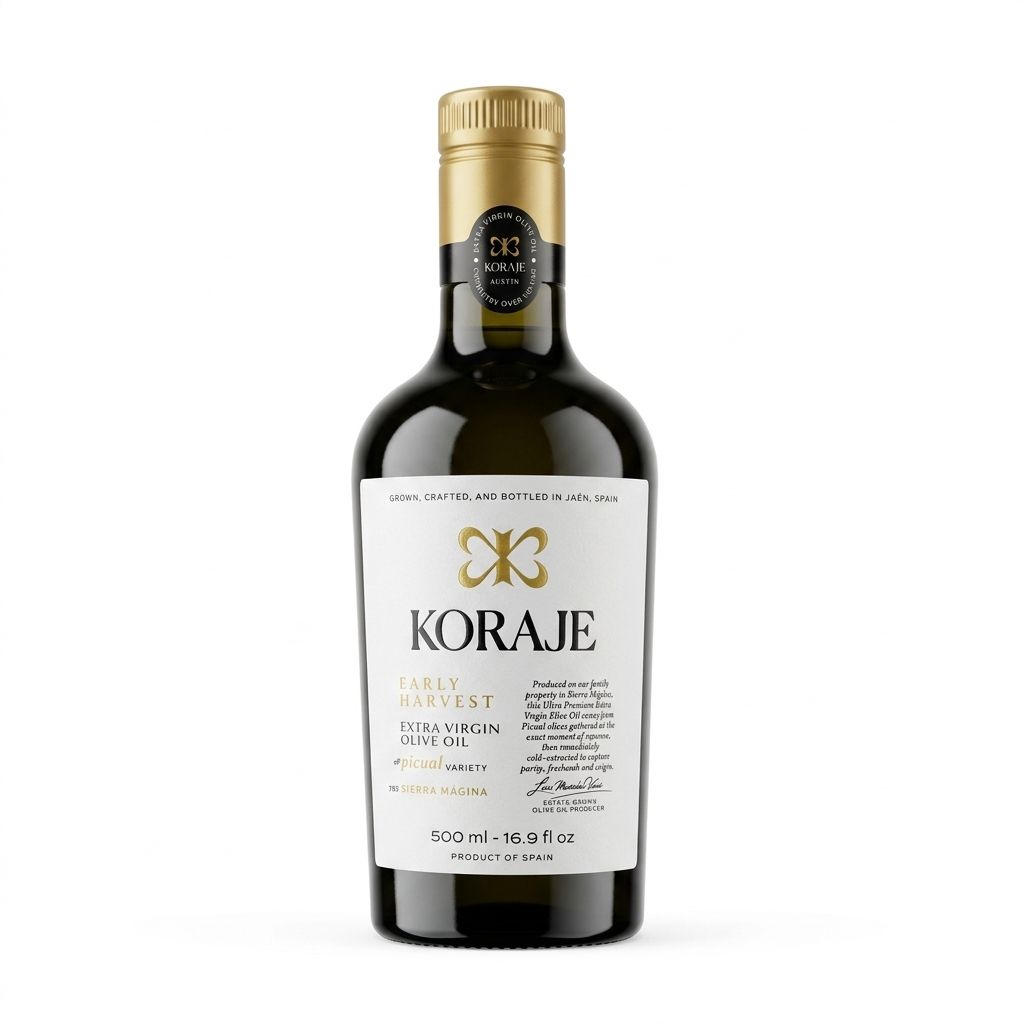
KORAJE describes its Early-Harvest Picual Extra Virgin Olive Oil as robust and peppery, with a high oleic-acid profile. That combination suits grilling and roasting well. You can read more on the KORAJE Picual olive oil product page.
How flavor changes under heat
Heat softens some of the sharp, peppery notes in an oil. A robust oil still leaves a green, savory flavor behind. A mild oil can taste flat after cooking.
That is a good reason to use a flavorful oil on bold foods like grilled vegetables, steak, and roasted potatoes. The oil adds taste instead of disappearing.
Matching the oil to the dish
Different dishes need different amounts of heat and flavor. This table gives a practical starting point.
| Dish | Typical heat | Oil approach |
|---|---|---|
| Grilled vegetables | Medium-high | Toss in oil before grilling; robust oil adds flavor |
| Grilled fish | Medium-high | Brush the fish lightly; finish with a drizzle |
| Roasted potatoes | 400–450°F | Coat well; robust oil gives a savory crust |
| Roasted vegetables | 400–425°F | Use enough oil to coat; stir once halfway |
| Sautéing | Medium | Any good extra virgin works |
| Salads and finishing | No heat | Use your best, most flavorful oil |
Extra virgin olive oil for grilling
Yes, extra virgin olive oil works on the grill. Oil the food, not the grate. A thin coat stops sticking and helps browning, and less oil drips onto the coals and flares up. A robust, high-oleic oil like Picual holds up best and still tastes of olive oil after cooking.
Olive oil for grilled vegetables
Toss sliced zucchini, peppers, or onions in a little oil before they hit the grate. The oil prevents sticking and helps browning. Season after grilling so the salt does not draw out water too early.
Olive oil for grilled fish
Fish is delicate, so oil the fish and the grate lightly. Finish with a fresh drizzle after cooking. This adds fruity, peppery flavor without extra heat.
Olive oil for roasting vegetables
Roasting is where a good extra virgin olive oil earns its place. The oil carries heat into the vegetables, helps the edges caramelize, and adds a green, peppery flavor that a neutral oil cannot.
Best olive oil for roasting vegetables
Choose a fresh extra virgin olive oil with a recent harvest date. A robust, high-oleic oil such as Picual holds up well at 400°F to 425°F and still tastes like olive oil when the tray comes out. Save very delicate, buttery oils for drizzling.
How much olive oil for roasting vegetables
A good starting point is 1 to 2 tablespoons of oil for every pound of vegetables, or about one sheet pan. You want every piece to look lightly glossy, not wet. Dense vegetables like carrots, squash, and Brussels sprouts take a little more. Watery vegetables like zucchini and mushrooms take a little less.
How to roast vegetables with extra virgin olive oil
- Heat the oven to 400°F to 425°F and put the empty sheet pan in to preheat.
- Cut the vegetables into even pieces so they cook at the same rate.
- Dry them well. Water makes vegetables steam instead of brown.
- Toss them with oil and salt in a bowl, not on the pan, so every piece is coated.
- Spread them in a single layer with space between pieces. Crowding traps steam.
- Roast, stirring once halfway, until the edges are browned.
- Finish with a small drizzle of fresh oil just before serving.
Olive oil roasted potatoes
Potatoes may be the best test of a roasting oil. They need high heat, a long time in the oven, and enough fat to build a crust.
Best olive oil for roasting potatoes
A robust extra virgin olive oil gives roasted potatoes a savory, golden crust and a flavor you can taste. Its oleic acid and polyphenols help it stay stable through a 40-minute roast.
How to make crisp olive oil roasted potatoes
- Heat the oven to 425°F with the sheet pan inside.
- Cut the potatoes into even 1½-inch pieces and dry them well.
- Toss with about 2 tablespoons of extra virgin olive oil per pound, plus salt, until each piece shines.
- Spread them on the hot pan, cut side down, in one layer.
- Roast 35 to 45 minutes, turning once, until crisp outside and soft in the center.
- Finish with a drizzle of fresh oil, flaky salt, and herbs.
Tips for better high-heat cooking
A few small habits make a big difference.
- Oil the food, not the grill. Oil dripping onto hot coals can flare up and burn.
- Preheat the pan or sheet. Hot surfaces help food crisp instead of steam.
- Use enough oil. Too little leaves dry spots. Too much makes food greasy.
- Do not reuse oil that smoked. Burnt oil tastes bitter.
- Keep a finishing bottle. Save a little raw oil for the end of cooking.
Finishing oil versus cooking oil
A finishing oil goes on after the heat. A cooking oil goes on before. Many households use the same bottle for both, especially if they buy one premium oil for everyday cooking.
Others keep two. They use a good all-purpose extra virgin oil for the pan and a more expensive oil for drizzling. Either approach works. For the full comparison, see finishing olive oil vs cooking olive oil.
Make it a routine
Cooking at home does not need to feel like a chore. A quick tray of roasted vegetables on a Sunday can feed you well all week. Simple, tasty habits like that are easy to keep.
Olive oil vs. other cooking oils
Cooks often wonder how olive oil compares with other options.
- Refined seed oils have a neutral taste and a higher smoke point. They add little flavor.
- Avocado oil tolerates very high heat and has a mild taste.
- Butter adds richness but burns easily at high heat.
- Extra virgin olive oil adds real flavor and holds up well at typical home cooking temperatures.
For searing at the very highest heat, a neutral oil may fit better. For most grilling and roasting, extra virgin olive oil is a reliable choice. The International Olive Council offers more background on olive oil grades and quality.
Conclusion: pick a fresh, flavorful oil
The best olive oil for roasting and grilling is fresh, high in oleic acid, and rich in flavor. Check the harvest date, look for the extra virgin grade, and match the oil to the dish. If you want a bold, peppery option to try, explore KORAJE’s early-harvest Picual olive oil.
Good food does not need to be fancy. Heat the oven or fire up the grill, share a meal, and enjoy the time you spend around the table.
Frequently asked questions
What is the best olive oil for grilling?
A fresh extra virgin olive oil with high oleic acid and good polyphenol content is a strong choice. Picual oils often fit this description.
Is extra virgin olive oil good for roasting vegetables?
Yes. It works well at standard roasting temperatures of 400°F to 450°F. It also adds flavor that refined oils lack.
How much olive oil should I use for roasting vegetables?
About 1 to 2 tablespoons per pound of vegetables, or per sheet pan. Every piece should look lightly glossy, not wet.
What is the smoke point of extra virgin olive oil?
Usually around 350°F to 410°F, depending on freshness and quality. Oxidative stability, which comes from oleic acid and polyphenols, matters more for cooking than the smoke point alone.
What is the best olive oil for roasting potatoes?
A fresh, robust extra virgin olive oil. It builds a savory crust and keeps its flavor at 425°F. High-oleic varieties such as Picual are a strong choice.
Does olive oil lose its flavor when heated?
Some of the sharp, peppery notes soften. A robust oil keeps more of its taste than a mild one.
What happens if olive oil smokes?
Smoking means the oil is breaking down. It will taste harsh. Lower the heat, wipe out the pan, and start again with fresh oil.
Can I use the same olive oil for sautéing and finishing?
You can. Many people keep one good bottle for both. Others save a more delicate oil for raw use.
How should I store olive oil used for cooking?
Keep it in a cool, dark place with the cap closed. Avoid the shelf next to the stove.

Written by Raj Mahat
Analytical Chemist
Metabolomics/ Lipidomics
EVOO Sommelier- O.N.A.O.O., Italy
Certified EVOO Sommelier- ESAO, Spain





Leave a comment
This site is protected by hCaptcha and the hCaptcha Privacy Policy and Terms of Service apply.