

Olive Oil vs Palm Oil: Two Fruit Oils, Very Different Fats

Short answer: Extra virgin olive oil is the healthier oil. Palm oil is about 50% saturated fat, led by palmitic acid, and is almost always refined. EVOO is about 80% monounsaturated, pressed without refining and rich in polyphenols. Palm oil's strengths are cost and heat stability for industrial frying.
Both are fruit oils
Palm oil is not a seed oil. Like olive oil, it is pressed from the fleshy fruit (mesocarp) of the oil palm, Elaeis guineensis. Don't confuse it with palm kernel oil, which comes from the seed and is lauric-acid rich, more like coconut oil. In our GC analysis, palm oil was 50.4% saturated, with palmitic acid (C16:0) as the main fatty acid and oleic acid close behind (reference 1).
Palm oil vs olive oil at a glance
| Characteristics | Olive oil (EVOO) | Palm oil | |
|---|---|---|---|
| Type of oil | Fruit juice | Fruit (mesocarp) oil | |
| Processing method | Mechanical only | Pressed, then thermal and chemical refining | |
| Main fatty acid | Oleic acid (C18:1) | Palmitic acid (C16:0) | |
| Type of fats | Monounsaturated | 79.60% | 40.27% |
| Polyunsaturated | 5.90% | 9.34% | |
| Saturated | 14.50% | 50.39% | |
| Smoke point | 350 °F | 466 °F (refined) | |
| Max. cooking heat | Medium | High | |
| Calories, kcal per 15 mL | 121 | 120 | |
| Flavor profile | Fruity, peppery, grassy | Neutral (refined); earthy, carrot-like (red palm) | |
| Main uses | Dressing, finishing, baking, medium-heat cooking | Deep frying, packaged foods, industrial use, biodiesel | |
| Polyphenols | High | Low | |
| GMO or non-GMO | Non-GMO | Non-GMO | |
Fatty acid data from our FAME analysis (reference 1).
Olive oil vs palm oil health
Palmitic acid raises LDL cholesterol when it replaces unsaturated fat. The Dietary Guidelines advise keeping saturated fat under 10% of calories (reference 2). EVOO's main fat, oleic acid, qualifies for the FDA's qualified heart-health claim (reference 3), and its polyphenols add antioxidant activity that refined palm oil lacks.
Red palm oil, the unrefined version, is the exception on micronutrients. It is rich in beta-carotene and tocotrienols, which give it its orange color. Refining removes most of them.
A refining issue: process contaminants
When oils are deodorized at high temperatures, glycidyl esters and 3-MCPD esters can form. The European Food Safety Authority found the highest levels in refined palm oil and palm fats (reference 4). Extra virgin olive oil is never refined or deodorized, so it does not go through this step.
The environmental cost
Palm oil is in roughly half of packaged supermarket products. Expansion of oil palm plantations has driven deforestation in Southeast Asia (reference 5). If you buy palm oil, look for RSPO-certified sustainable sources.
Cooking
Refined palm oil's smoke point is about 466 °F and its saturated fat makes it stable in commercial fryers. At home, frying runs at 350–375 °F, well within EVOO's range. See cooking with extra virgin olive oil. And because EVOO's MUFA has only one double bond, it holds up better than most seed oils.
Part of our guide: Olive oil vs vegetable oil, every cooking oil measured.
Final Thoughts
Two fruit oils, very different fats. Palm oil is half saturated, refined and costly to forests. Extra virgin olive oil is mostly oleic acid, never refined and rich in polyphenols. Let palm oil stay in the factory fryer.
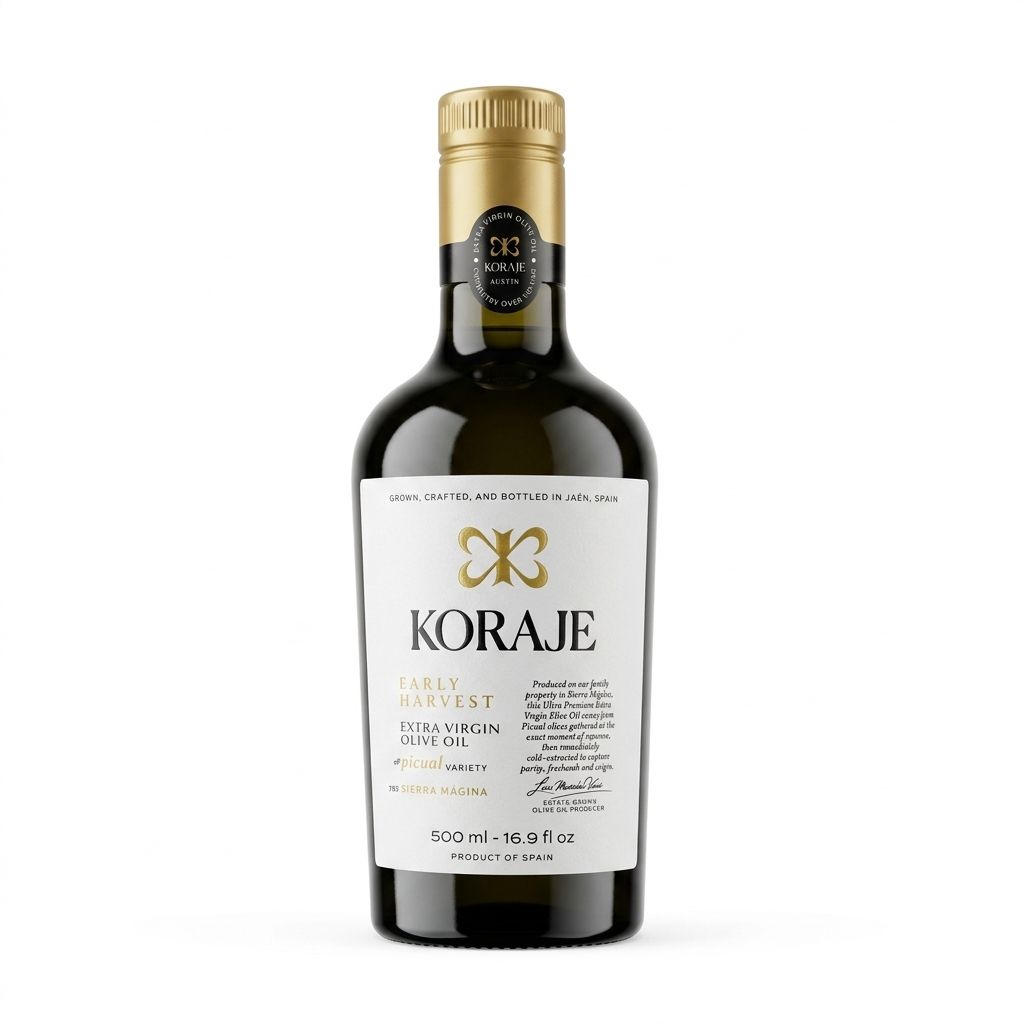
In your kitchen, pour KORAJE Early-Harvest Picual Extra Virgin Olive Oil, lab results published.
Related: our featured comparison, olive oil vs coconut oil, and olive oil vs avocado oil.
Frequently Asked Questions
Is palm oil healthier than olive oil?
No. Palm oil is about 50% saturated fat, mostly palmitic acid, which raises LDL cholesterol. Extra virgin olive oil is about 80% monounsaturated and rich in polyphenols.
Is palm oil a seed oil?
No. Palm oil is pressed from the fruit flesh of the oil palm, like olive oil. Palm kernel oil, from the seed, is a different oil.
What is red palm oil?
Unrefined palm oil. It keeps its carotenoids and tocotrienols, which give it an orange color and earthy flavor. It is still about 50% saturated fat.
Why is palm oil in so many foods?
It is cheap, semi-solid at room temperature, heat-stable and has a long shelf life. It replaced partially hydrogenated oils in many packaged foods.
Is palm oil bad for the environment?
Plantation expansion has driven deforestation and habitat loss, especially in Indonesia and Malaysia. RSPO-certified palm oil aims to reduce that impact.
References
- Mahat, R.; Kailey, L. Rapid and Efficient Esterification Process for FAME Profiling of Vegetable Fixed Oils and Fats. Application note MK_AN13723EN, MilliporeSigma, 2024. PDF
- Dietary Guidelines for Americans, 2020–2025. USDA and HHS. Link
- FDA Completes Review of Qualified Health Claim Petition for Oleic Acid and the Risk of Coronary Heart Disease. U.S. FDA, 2018. Link
- Process contaminants in vegetable oils and foods. European Food Safety Authority, 2016. Link
- Palm oil. World Wildlife Fund. Link
- Cooking with fats and oils: can they withstand the heat? Colorado State University, College of Health and Human Sciences. Link
- Nutrient value of some common foods: Fats and oils. Health Canada. Link
- Smoke points of oils. Vom Fass. Link

Written by Raj Mahat
Analytical Chemist
Metabolomics/ Lipidomics
EVOO Sommelier- O.N.A.O.O., Italy
Certified EVOO Sommelier- ESAO, Spain





Leave a comment
This site is protected by hCaptcha and the hCaptcha Privacy Policy and Terms of Service apply.