

Can Dogs Have Olive Oil? What a Chemist Would Pour in the Bowl (and What He Wouldn't)

Short answer: yes, most healthy dogs can have a little plain olive oil. Olive oil isn't toxic to dogs, and a small amount mixed into food is generally well tolerated. But olive oil is pure fat, about 120 calories a tablespoon, so too much can cause diarrhea or contribute to pancreatitis. And garlic-infused olive oil is dangerous, because garlic is toxic to dogs. Ask your veterinarian before you make it a daily habit.
His name is Haru, a Japanese Shiba Inu, 5 years old. He has been an avid lover of olive oil since the age of 4 weeks. Be it grilled chicken, or boiled chicken or just some plain rice, he loves the grassy notes from a drizzle of early-harvest Picual olive oil.
One honest note: I'm a chemist and a dog-lover, not a veterinarian. This article explains the oil. Please get an advice from your vet for better answer.
Is olive oil good for dogs?
It can be a reasonable small addition, not a medicine. What's in it:
- Monounsaturated fat. About three-quarters oleic acid. Dogs digest fat well and use it for energy.
- Vitamin E. Extra virgin olive oil carries natural vitamin E (KORAJE: 327 mg/kg alpha-tocopherol).
- Polyphenols. Extra virgin keeps antioxidant compounds that refined oils lose.
What it isn't: a cure for anything. Claims that olive oil fixes itchy skin, joints or a dull coat in dogs come mostly from anecdote, not clinical trials. A complete commercial dog food is already formulated with the fats a dog needs.
The risks, in plain words
| Risk | Why it happens | What to do |
|---|---|---|
| Diarrhea, vomiting | A sudden dose of fat upsets the gut | Start tiny; stop if stools loosen |
| Pancreatitis | High-fat foods are a known trigger in dogs | Avoid entirely if your dog has had pancreatitis or is on a low-fat diet |
| Weight gain | About 120 calories per tablespoon, a lot for a small dog | Count it in daily calories |
| Garlic or onion poisoning | Garlic, onion and other Allium plants damage dogs' red blood cells | Never give infused or seasoned oils |
How much olive oil can a dog have?
There's no official dose. Veterinary-reviewed guidance generally says to start very small, mixed into food, and to stay at or below about a teaspoon a day for a medium-sized dog, less for small dogs, and only with your vet's agreement. Watch the stool for a few days. If it softens, stop.
Think of it as a drizzle, not a pour.
Which olive oil for dogs?
- Plain extra virgin olive oil. Nothing added.
- Never infused or flavored oils. Garlic, onion, chili and herb oils can contain ingredients that harm dogs. Garlic is the big one.
- Not from your salad. Dressings often contain garlic, onion, salt or sugar.
- Fresh, not rancid. Old oil is oxidized. If it smells like crayons, it's not for you or the dog.
A very peppery early-harvest oil may make a dog sneeze or lick its lips. It's harmless, but many dogs prefer a milder oil.
Can dogs eat olives?
Plain, pitted olives in tiny amounts are not toxic. But:
- Pits can choke a dog or block the intestine.
- Brined and canned olives are very salty.
- Stuffed olives may contain garlic, cheese or chili.
An occasional plain, pitted olive as a treat is fine for most dogs. A bowl of martini olives is not.
When to skip olive oil completely
- Your dog has had pancreatitis, or is prone to it
- Your dog is on a prescription or low-fat diet
- Your dog is overweight
- Your dog has chronic diarrhea or a sensitive stomach
If your dog swallows garlic oil or seasoned food, call your veterinarian or the ASPCA Animal Poison Control Center.
Final Thoughts
A few drops of plain olive oil won't hurt most healthy dogs, and the stare by the kitchen counter will thank you for it. But dogs don't need olive oil the way we enjoy it. Keep it small, keep it plain, never infused with garlic, and let your vet have the last word.
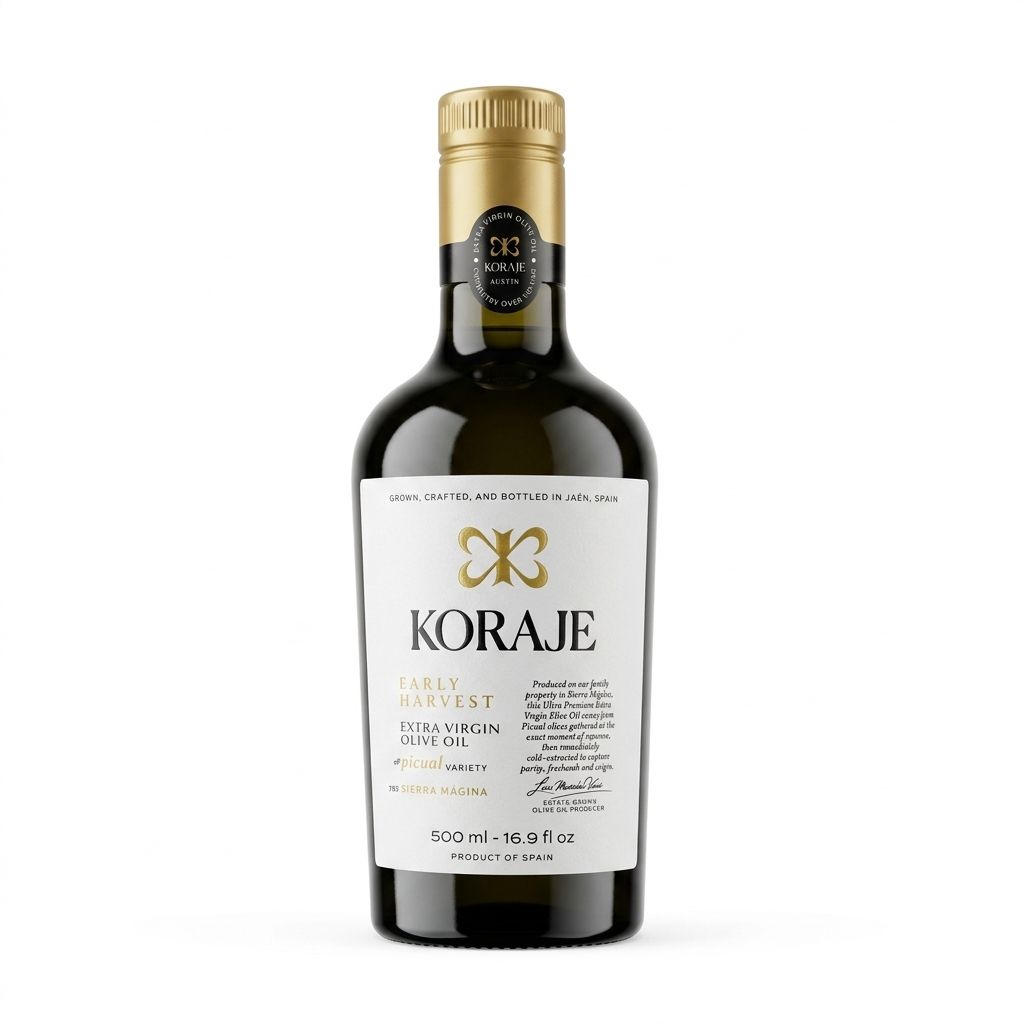
For your own salad, there's always KORAJE Early-Harvest Picual Extra Virgin Olive Oil. For the dog, a drizzle and a good walk.
Frequently asked questions
Can dogs have olive oil?
Yes, most healthy dogs can have a small amount of plain olive oil mixed into food. Ask your vet first, especially if your dog has digestive or weight issues.
Is olive oil good for dogs?
It's a source of monounsaturated fat and vitamin E, but it isn't a cure for skin, coat or joint problems. A complete dog food already supplies the fats dogs need.
How much olive oil can I give my dog?
There's no official dose. Vet-reviewed guidance suggests starting very small and staying at or below about a teaspoon a day for a medium dog, less for small dogs, with your vet's approval.
Can olive oil give dogs diarrhea?
Yes. Too much fat at once can cause diarrhea or vomiting. Start tiny and stop if stools loosen.
Is garlic olive oil safe for dogs?
No. Garlic is toxic to dogs. Never give garlic-infused or seasoned oils.
Can dogs eat olives?
Plain, pitted olives in tiny amounts are not toxic. Avoid pits, salty brined olives and stuffed olives.
References
View all references
- ASPCA Animal Poison Control Center. People foods to avoid feeding your pets (garlic, onions and other Allium species).
- Merck Veterinary Manual. Pancreatitis in dogs and cats: high-fat meals as a risk factor.
- Dogster. "Should you add olive oil to your dog's food?" Reviewed by Dr. Amanda Charles, BVSc MRCVS, updated June 16, 2026. Link
- U.S. Department of Agriculture, FoodData Central. Oil, olive, salad or cooking.
- Tello Lab (IOC-recognized). Certificate of analysis, KORAJE lot L-H1118826, report 60728093500.

Written by Raj Mahat
Analytical Chemist
Metabolomics/ Lipidomics
EVOO Sommelier- O.N.A.O.O., Italy
Certified EVOO Sommelier- ESAO, Spain





Leave a comment
This site is protected by hCaptcha and the hCaptcha Privacy Policy and Terms of Service apply.