

Olive Oil for the Mediterranean Diet: How Much, Which Kind, and Why It's the Backbone

Short answer: extra virgin olive oil is the main fat of the Mediterranean diet, not a garnish. In the large PREDIMED trial, the olive oil group was asked to use at least 4 tablespoons a day and was given about a liter of extra virgin olive oil a week for the household. Use it in place of butter, margarine and other fats; choose a fresh extra virgin oil with a harvest date; and use it every day, on vegetables, beans, fish and bread.
In the hill villages of Crete, they tell a story about the old men who outlived everyone. They worked the fields until their eighties. They walked everywhere. And at every meal, on bread, on beans, on greens, over fish, they poured olive oil, not a careful teaspoon but a long, golden stream, the way other people pour water. Scientists came from America to find out why they kept living. They're still writing papers about it.
Why olive oil is the backbone of the Mediterranean diet
The Mediterranean diet is built on vegetables, fruit, legumes, whole grains, nuts, fish and olive oil, with little red meat, processed food or sugar. Olive oil is the glue. It makes vegetables and beans taste good enough to eat in large amounts, and it replaces the saturated fats common in other Western diets.

The International Olive Council calls olive oil the main source of fat in the traditional Mediterranean diet, and researchers point to it as one of the diet's key protective components.
What the research used
| Study | Olive oil used | Main finding |
|---|---|---|
| PREDIMED (Spain, ~7,400 adults at high cardiovascular risk) | Extra virgin, ~1 L per week per household; advice of 4+ tablespoons a day | About 30% fewer major cardiovascular events vs a reduced-fat control diet |
| Harvard cohorts (US, 90,000+ adults, 28 years) | More than ½ tablespoon a day vs rarely | 19% lower risk of cardiovascular death |
| FDA qualified health claim | About 1½ tablespoons (20 g) a day of high-oleic oil replacing saturated fat | May reduce coronary heart disease risk (supportive, not conclusive) |
The pattern is consistent: more olive oil, used instead of other fats, goes with better heart outcomes. (More: health benefits of extra virgin olive oil.)
How much olive oil a day on the Mediterranean diet?
- Studied amounts range from about half a tablespoon to 4 tablespoons a day.
- A practical target for many people is 2–4 tablespoons a day, used in place of other fats.
- Calories count. Each tablespoon is about 120 calories. The benefit comes from swapping, not adding. Full chart: calories in a teaspoon of olive oil.
If you have a medical condition or are managing your weight, plan the amount with your doctor or dietitian.
Which olive oil is best for the Mediterranean diet?
Extra virgin. PREDIMED used extra virgin olive oil, not refined "olive oil." Refining strips out the polyphenols, vitamin E and aroma; the fat stays, the extras go. What to look for:
- "Extra virgin" on the label
- A harvest date within the last 12–18 months
- One origin, ideally a single estate or protected region
- Dark glass
- A published lab report, ideally with polyphenols
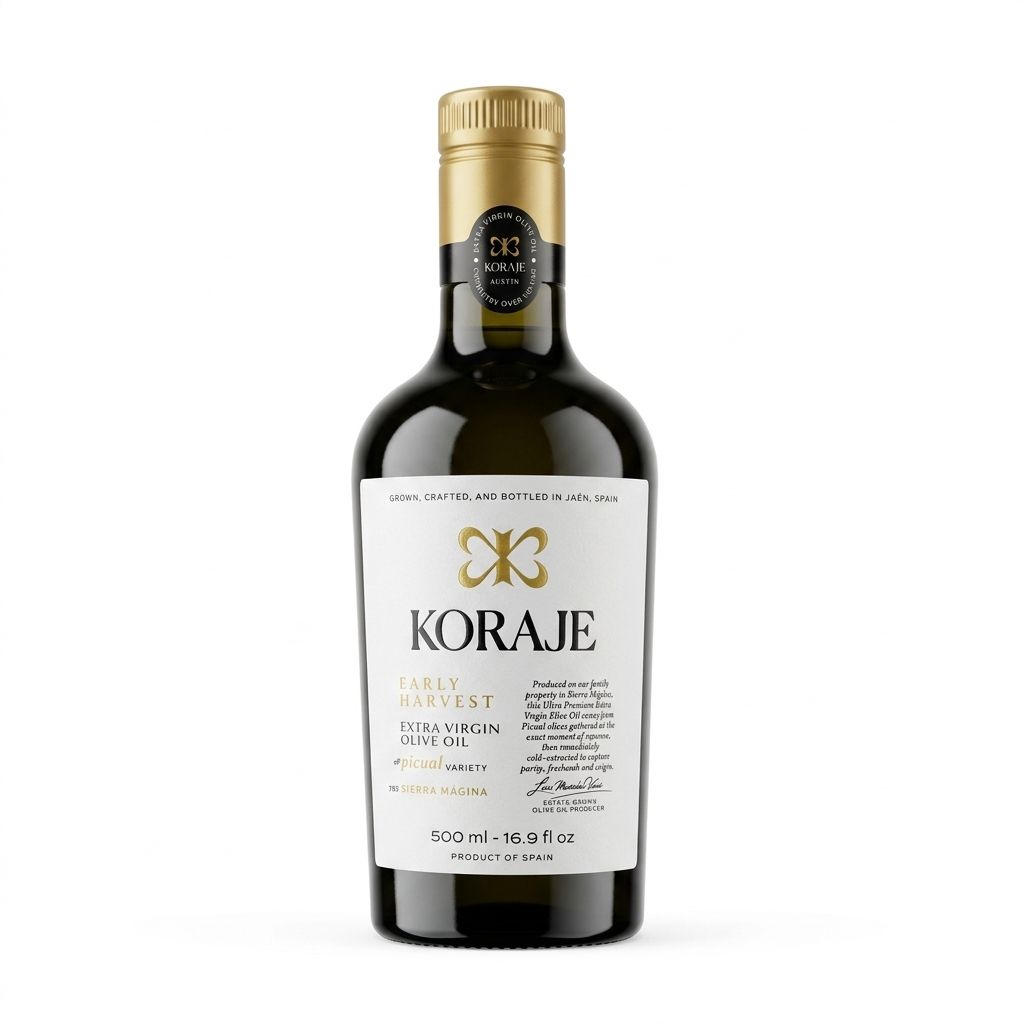
KORAJE Early-Harvest Picual measures 454 mg/kg polyphenols and 77% oleic acid, with its full report published. (The 7 lab numbers that decide the healthiest olive oil.)
Easy ways to use olive oil every day
- Breakfast: drizzle over eggs, tomatoes on toast or Greek yogurt with honey.
- Lunch: a simple dressing, 3 parts oil to 1 part vinegar or lemon.
- Dinner: roast vegetables in it; finish beans, lentils, soup or fish with a raw drizzle.
- Swaps: olive oil instead of butter on bread, potatoes and pasta; instead of vegetable oil in baking (olive oil vs vegetable oil).
- Snacks: bread dipped in oil and salt; vegetables with an oil-based dip.
Common Mediterranean diet mistakes with olive oil
- Adding oil without removing other fats. The studies swapped; they didn't stack.
- Buying "light" or "pure" olive oil. It's refined. Choose extra virgin.
- Saving the good oil for special occasions. Olive oil fades with time. Use it daily and finish it within one to two months of opening.
Final Thoughts
The Mediterranean diet isn't a list of forbidden foods. It's a kitchen where olive oil is poured generously over plants, beans and fish, instead of butter. Choose extra virgin, choose fresh, swap it for other fats, and use it every day. That's what the old men of Crete were doing. The scientists are still catching up.
The everyday oil of a Mediterranean kitchen: KORAJE Early-Harvest Picual Extra Virgin Olive Oil.
Frequently asked questions
What olive oil is best for the Mediterranean diet?
Fresh extra virgin olive oil with a harvest date and, ideally, a published lab report. The PREDIMED trial used extra virgin, not refined olive oil.
How much olive oil per day on the Mediterranean diet?
Studies used from about half a tablespoon to 4 tablespoons a day. Many people aim for 2–4 tablespoons, used in place of other fats.
Is olive oil the most important part of the Mediterranean diet?
It's the main fat and a key protective component, alongside vegetables, legumes, whole grains, nuts and fish.
Can I cook with olive oil on the Mediterranean diet?
Yes. Extra virgin olive oil is used for sautéing, roasting, baking and frying across the Mediterranean.
Will olive oil make me gain weight?
Not if it replaces other fats. In PREDIMED, the olive oil group did not gain more weight than the control group.
References
View all references
- Estruch R, et al. Primary prevention of cardiovascular disease with a Mediterranean diet supplemented with extra-virgin olive oil or nuts. New England Journal of Medicine. 2018;378:e34.
- Estruch R, et al. Effect of a high-fat Mediterranean diet on bodyweight and waist circumference: a prespecified secondary outcomes analysis of the PREDIMED randomised controlled trial. Lancet Diabetes & Endocrinology. 2016;4(8):666–676.
- Guasch-Ferré M, et al. Consumption of olive oil and risk of total and cause-specific mortality among U.S. adults. Journal of the American College of Cardiology. 2022;79:101–112.
- U.S. Food and Drug Administration. Qualified health claim for oleic acid and the risk of coronary heart disease, 2018.
- International Olive Council. The Mediterranean diet and olive oil. Link
- Tello Lab (IOC-recognized). Certificate of analysis, KORAJE lot L-H1118826, report 60728093500.

Written by Raj Mahat
Analytical Chemist
Metabolomics/ Lipidomics
EVOO Sommelier- O.N.A.O.O., Italy
Certified EVOO Sommelier- ESAO, Spain





Leave a comment
This site is protected by hCaptcha and the hCaptcha Privacy Policy and Terms of Service apply.