

Is Olive Oil Gluten-Free? What a Chemist Checks on the Label

Short answer: is olive oil gluten free? Yes, pure olive oil is naturally gluten-free. It's pressed from olive fruit, which contains none of the gluten proteins found in wheat, barley and rye. Extra virgin olive oil is also vegan and dairy-free. The real risks are flavored or infused oils, oil-based dips and sauces, and cross-contact in restaurants, not the oil itself.
For someone with celiac disease, a meal out is a small act of trust. A crumb from a breadbasket falls into a dish of oil, and hours later you pay for it. The oil wasn't the problem. The crumb was.
Why olive oil is gluten-free
- Gluten is a protein. It comes from wheat, barley, rye and their relatives.
- Olives aren't grains. They are fruit, and they contain no gluten proteins.
- Oil is fat. Pressing separates oil from water and solids. Extra virgin olive oil is essentially all fat, with tiny amounts of natural compounds such as polyphenols, vitamin E and sterols, but no gluten.
- Extra virgin is made mechanically. By international standards, it is produced only by mechanical means, without chemical treatment or additives.
What "gluten-free" means on a US label
Under FDA rules (21 CFR 101.91), a food labeled "gluten-free" must contain less than 20 parts per million of gluten. A pure olive oil can carry the claim, but it doesn't need to. The absence of a label doesn't mean the oil contains gluten; it just means the producer didn't add the claim.
When olive oil products can contain gluten
| Product | Gluten risk | Why |
|---|---|---|
| Pure extra virgin olive oil | None from the oil | Single ingredient |
| Refined, "light" or "pure" olive oil | Very low | Still just olive oil |
| Flavored or infused oils | Possible | Added flavorings, seasonings or shared facilities |
| Oil-based dips and dressings | Possible | Soy sauce, malt vinegar, thickeners, breadcrumbs |
| Restaurant bread-dipping oil | High | Crumbs from shared bread |
| Fryer oil in restaurants | High | Shared with breaded foods |
How to buy olive oil safely on a gluten-free diet
- Read the ingredient list. It should say only "extra virgin olive oil" or "olive oil."
- Be careful with flavored oils. Check for a gluten-free claim or contact the producer.
- Look for a single origin. Traceable oils come from one source and one process.
- At restaurants, ask for a fresh pour. Not the shared dish on the table.
- Use a clean spoon at home. Don't dip bread straight into the bottle if anyone in the house is celiac.
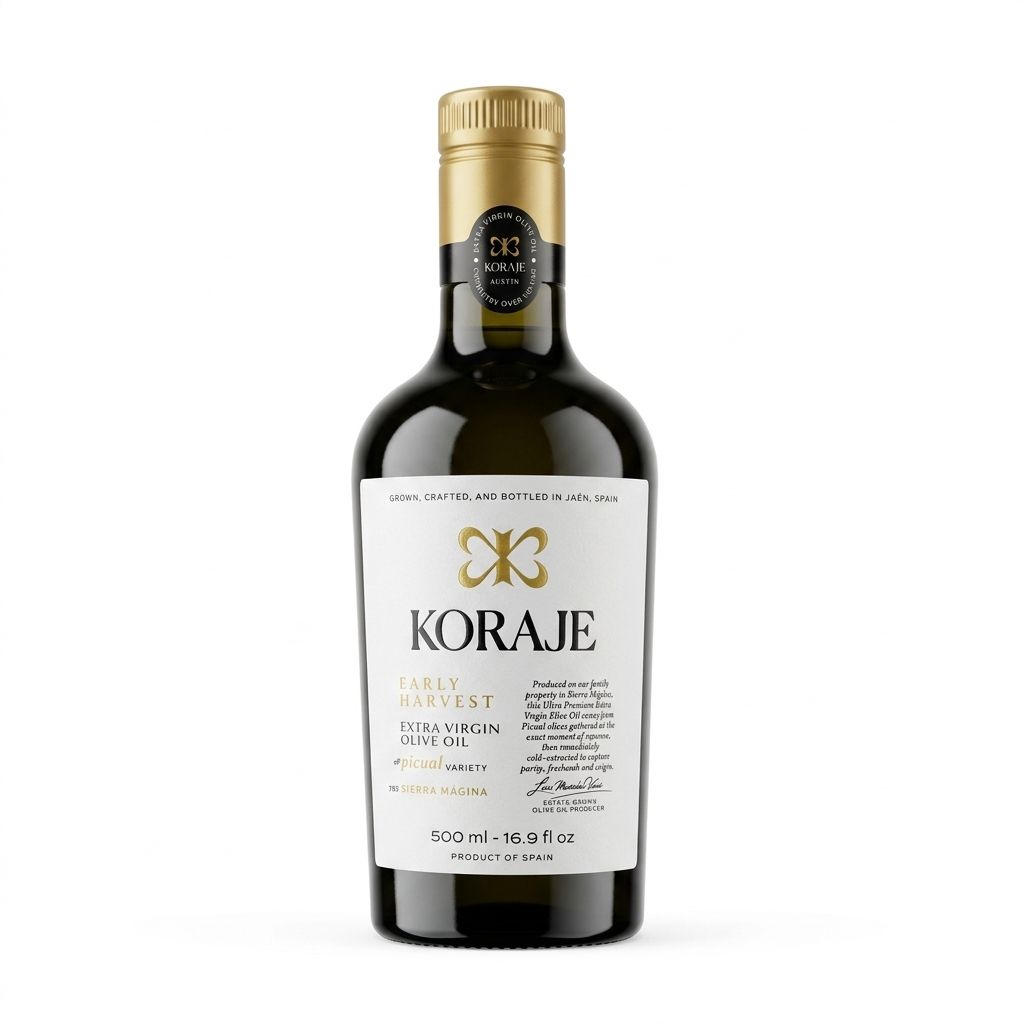
KORAJE Early-Harvest Picual contains one ingredient: extra virgin olive oil from Picual olives grown on one estate in PDO Sierra Mágina, Spain. Nothing is added.
Is olive oil vegan and dairy-free?
Yes. Olive oil is plant-based, with no animal ingredients and no milk proteins. It's a common butter substitute for vegan and dairy-free cooking and baking. (Olive oil vs butter.)
Final thoughts
Pure olive oil is gluten-free by nature. Trouble comes from what gets added to it or dropped into it. Buy single-ingredient extra virgin olive oil, read labels on flavored products, and ask for a fresh pour when you eat out.
One ingredient, one estate, one lab report: KORAJE Early-Harvest Picual Extra Virgin Olive Oil.
Frequently asked questions
Is extra virgin olive oil gluten-free?
Yes. Pure extra virgin olive oil comes from olives, which contain no gluten proteins.
Is olive oil safe for people with celiac disease?
Pure olive oil is. Watch out for flavored oils, dips and restaurant oils that may be cross-contaminated. Follow your doctor's advice.
Can flavored olive oil contain gluten?
It can, if flavorings or seasonings contain gluten or the oil is made in a shared facility. Check the label or ask the producer.
Is olive oil vegan?
Yes. It is entirely plant-based and contains no animal products.
Is olive oil dairy-free?
Yes. It contains no milk or milk proteins.
References
View all references
- U.S. Food and Drug Administration. Gluten-free labeling of foods, 21 CFR §101.91.
- International Olive Council. Trade Standard Applying to Olive Oils and Olive Pomace Oils, COI/T.15/NC No 3.
- Celiac Disease Foundation. Gluten-free foods and cross-contact guidance.
- U.S. Department of Agriculture, FoodData Central. Oil, olive, salad or cooking.

Written by Raj Mahat
Analytical Chemist
Metabolomics/ Lipidomics
EVOO Sommelier- O.N.A.O.O., Italy
Certified EVOO Sommelier- ESAO, Spain





Leave a comment
This site is protected by hCaptcha and the hCaptcha Privacy Policy and Terms of Service apply.